Golden Rooster Film Forum · Intellectual Property Protection Forum: Strengthening Intellectual Property Protection to Promote the High-Quality Development of the Film Industry
On the afternoon of 3 November 2023, at the 2023 China Golden Rooster & Hundred Flowers Film Festival, the Golden Rooster Film Forum · Intellectual Property Protection Forum was held at the Tianyuan Hotel in Xiamen
Film is a cultural activity of creativity, creation and innovation. A healthy, sound and orderly creative environment is vital to the flourishing of the film industry. For a long time, owing to the complexity of filmmaking, there have been many problems of intellectual property rights being unclearly defined, difficult to exercise and poorly protected, which have greatly affected the efficiency of film creation and its influence. To study and implement Xi Jinping Thought on Culture, implement the guiding principles of General Secretary Xi Jinping’s important instructions on the development of Chinese cinema, and promote the high-quality development of the Chinese film industry under the rule of law, the forum launched an action for intellectual property protection in Chinese cinema, aiming to jointly foster a good creative atmosphere, build a sound foundation for the film industry, clean up the industry ecosystem, motivate creators and investors, release innovative and creative vitality, and promote the high-quality development of film. The theme of the forum was “Strengthening Intellectual Property Protection to Promote the High-Quality Development of the Film Industry”.Tao Kaiyuan, Vice President of the Supreme People’s Court and Grand Justice of the Second Rank; Kang Tao, member of the Leading Party Members’ Group of the Fujian Provincial People’s Government; Zhang Hong, member of the Leading Party Members’ Group and Secretary of the Secretariat of the China Federation of Literary and Art Circles and Secretary of the Party Group of the China Film Association; Bai Yimin, Deputy Director of the Film Bureau of the Publicity Department of the CPC Central Committee; and Tang Zhaozhi, Deputy Director and first-level inspector of the Copyright Administration Bureau of the Publicity Department of the CPC Central Committee, delivered addresses at the forum.

Attending the forum were Yan Xiaohong, President of the Copyright Society of China; Ming Zhenjiang, adviser to the China Film Association, President of the China Film Producers’ Association and former Director of the August First Film Studio; Ren Zhonglun, Vice Chairman of the China Film Association and President of the China Film Copyright Association; Yin Li, Vice Chairman of the China Film Association and Vice President of the China Film Directors’ Guild; Yang Wujun, Director of the Management Office of the National Special Fund for Film Development; Yan Shaofei, Deputy Secretary of the Party Group and Secretary-General of the China Film Association; Wang Xingdong, adviser to the China Film Association and President of the China Film Literature Society; Chen Baoguo, National Class-A actor and President of the China Film Performance Art Academy; Rao Shuguang, film theorist and President of the China Film Critics Association; Lin Guanghai, Chief Judge of the Third Civil Division of the Supreme People’s Court; Li Weihua, member of the Standing Committee of the CPC Xiamen Municipal Committee and Secretary of its Political and Legal Affairs Commission; Liu Shuangyu, Party Secretary and President of the Beijing Intellectual Property Court; Xie Kaihong, Party Secretary and President of the Xiamen Intermediate People’s Court; Wu Lixue, Vice President of the Fujian High People’s Court; and Lin Xiuqin, Professor at Xiamen University School of Law and Director of its Intellectual Property Research Institute.

Moderator: Lin Yongjian
The forum was moderated by Lin Yongjian, member of the 11th National Committee of the China Federation of Literary and Art Circles and Vice President of the China Literary and Art Volunteers Association.
Keynote Addresses
In the keynote addresses, Tao Kaiyuan, Vice President of the Supreme People’s Court and Grand Justice of the Second Rank, pointed out that the Intellectual Property Protection Forum is a beneficial initiative to put Xi Jinping Thought on the Rule of Law and Xi Jinping Thought on Culture into practice, and a concrete step to implement the guiding principles of the National Conference on Publicity, Ideological and Cultural Work and General Secretary Xi’s relevant important instructions.

Tao Kaiyuan, Vice President of the Supreme People’s Court and Grand Justice of the Second Rank
Tao Kaiyuan said that innovation is the life of literature and art; equal protection of diverse parties is a practical need for the healthy development of film art; the rule of law and standardisation are necessary requirements for the high-quality development of the film industry; and the integration of technology is an important task of judicial protection in the film field. The people’s courts are willing to work with all sectors of society to take on the new cultural mission of the new era and make new contributions to building the modern civilisation of the Chinese nation and a leading socialist country in culture.
Kang Tao, member of the Leading Party Members’ Group of the Fujian Provincial People’s Government, stressed that innovation is the primary driving force of development, and protecting intellectual property means protecting innovation. Going forward, guided by Xi Jinping Thought on Socialism with Chinese Characteristics for a New Era, we will first, improve the reform of the intellectual property trial mechanism; second, improve diversified dispute resolution mechanisms; third, strengthen judicial protection in key fields; and fourth, work to create a good climate of public opinion.
Zhang Hong, member of the Leading Party Members’ Group and Secretary of the Secretariat of the China Federation of Literary and Art Circles and Secretary of the Party Group of the China Film Association, said he hoped the event would launch a long-term service mechanism to strengthen intellectual property protection in film, build a high-quality film market system, improve fair competition within the industry, stimulate the vitality of film market entities, and promote higher-quality development of the Chinese film industry under the rule of law.
Bai Yimin, Deputy Director of the Film Bureau of the Publicity Department of the CPC Central Committee, said that film-related intellectual property is distinctive and complex. In recent years legal disputes over the ownership of copyright in film works and the distribution of benefits have occurred from time to time, showing that some film companies and practitioners need a stronger awareness of the rule of law and of contracts, and that industry associations need to play a fuller role.
Tang Zhaozhi, Deputy Director and first-level inspector of the Copyright Administration Bureau of the Publicity Department of the CPC Central Committee, pointed out that, in line with the arrangements of the Central Committee, the Bureau has for years stepped up the administrative protection of film copyright and worked to build a good ecosystem for film and television copyright protection: first, by continuously improving top-level institutional design; second, by intensifying the crackdown on film infringement and piracy; third, by strengthening the supervision of online platforms; and fourth, by promoting social co-governance and public guidance.
Release Session
Lin Guanghai, Chief Judge of the Third Civil Division of the Supreme People’s Court, presented recommendations on intellectual property protection in film and released typical cases. In view of the characteristics of the cases and the causes of the problems, the judicial recommendations are: first, to advocate and follow industry practices that encourage innovation and creation; second, to strengthen copyright awareness and strictly enforce the Copyright Law; third, to make good use of technical measures and innovate licensing mechanisms so as to reduce infringement at the source; and fourth, to actively and widely promote intellectual property protection in the dissemination of film works.
Yan Shaofei, Deputy Secretary of the Party Group and Secretary-General of the China Film Association, read out the “Initiative on Strengthening Intellectual Property Protection to Promote the High-Quality Development of Chinese Cinema”. He called on film industry practitioners to respect creation, protect innovation, abide by the Copyright Law, respect the law and uphold the rule of law, strengthen industry self-discipline, respect science and technology, improve mechanisms, keep strengthening the protection and use of copyright, take responsibility and act proactively, and help build China into a country strong in intellectual property.

Representatives of the China Film Association, the China Film Distribution and Exhibition Association, the China Film Producers’ Association, the China Film Literature Society, the China Film Performance Art Academy, the China Film Copyright Association, the Copyright Society of China and the China Film Critics Association then jointly signed the film industry initiative, and said they would put its contents into practice to advance intellectual property protection in Chinese cinema.
Roundtable Discussion
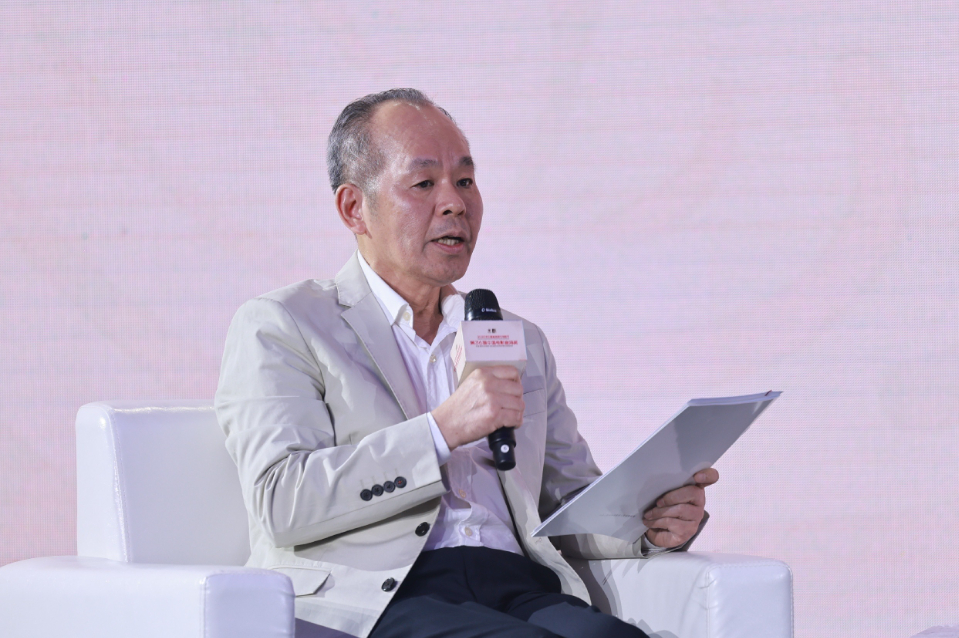
Moderator: Lin Guanghai
The forum included a roundtable discussion in which the guests discussed new ideas, concepts and measures for intellectual property protection.
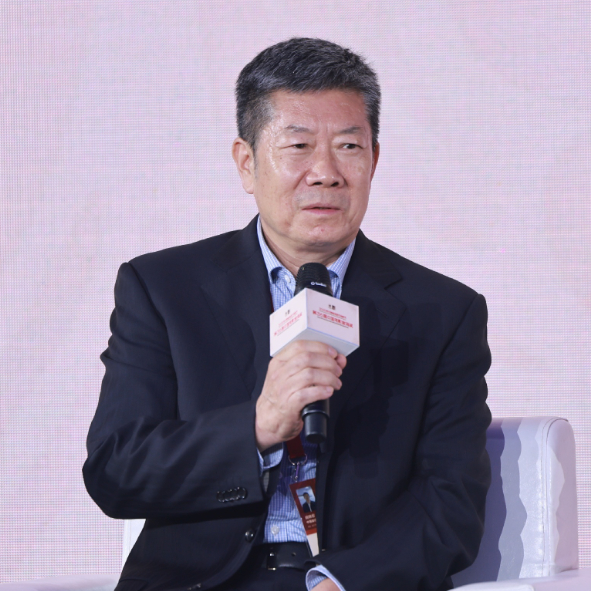
Yan Xiaohong, President of the Copyright Society of China
The hearing of intellectual property cases can draw on the ‘Fengqiao Experience’. Under the guidance of the courts, the Film Bureau and the Copyright Administration Bureau of the Publicity Department of the CPC Central Committee, the China Federation of Literary and Art Circles, the China Film Association and other bodies, social groups and organisations can mediate some civil cases, minimising disputes and conflicts, lowering litigation costs and helping to build unity.

Ren Zhonglun, Vice Chairman of the China Film Association and President of the China Film Copyright Association
The environment, policies, laws and regulations for intellectual property protection in film are becoming more comprehensive, and protection serves high-quality development. Protecting the intellectual property of a film, including its derivative property rights, is vital for a company.

Yin Li, Vice Chairman of the China Film Association and Vice President of the China Film Directors’ Guild
In the rapid development of film, many problems we never anticipated have emerged: the release and use of fragments of feature films on short-video platforms such as Douyin, Kuaishou and Xiaohongshu, and, with the spread and application of Web3, blockchain and artificial intelligence, new issues of copyright, authorship rights and portrait rights keep arising. These new business forms, new situations and new problems urgently need legal support and protection.

Rao Shuguang, film theorist and President of the China Film Critics Association
The development of Chinese cinema depends on many small and medium-sized companies and ordinary creators. Could we protect them further, truly ensuring at the source that creativity wins and using creativity to drive the high-quality development of Chinese cinema?

Liu Shuangyu, Party Secretary and President of the Beijing Intellectual Property Court
In the rapid development of film, many problems never seen before have emerged. For the courts’ trial work, we must pay close attention to the industry’s new development models and newly emerging issues, and through judicial rulings, the release of cases and the establishment of adjudication rules in special cases, contribute judicial strength to the healthy and orderly development of the industry.

Wu Lixue, Vice President of the Fujian High People’s Court
I suggest that film producers, at different stages, plan their intellectual property according to the types of rights involved in the elements of a film, and promptly preserve evidence of ownership, register copyrights and register trademarks, so as to protect themselves with these rights.

Lin Xiuqin, Professor at Xiamen University School of Law and Director of its Intellectual Property Research Institute
The film industry is one of the most intellectual-property-intensive industries, with complex legal relationships and many disputes, and industry associations can play a valuable role. China is now a major film country and a major country in artificial intelligence, and AI-generated creation has become a new trend. In the context of AI, it is necessary to strengthen the protection of individuals’ portrait rights, image rights and performers’ rights.

The forum was hosted by the Research Center for Judicial Protection of Intellectual Property of the Supreme People’s Court and the China Film Association, and organised by the Film Art Center of the China Federation of Literary and Art Circles. Its main purpose was to implement the guiding principles of General Secretary Xi Jinping’s important instructions on the development of Chinese cinema and promote the high-quality development of the Chinese film industry under the rule of law.
The forum will further provide legal grounds, legal analysis and industry norms for overall issues and specific cases, put forward guiding opinions and industry initiatives, and use the force of law to help foster a good creative atmosphere and build a sound foundation for the film industry.