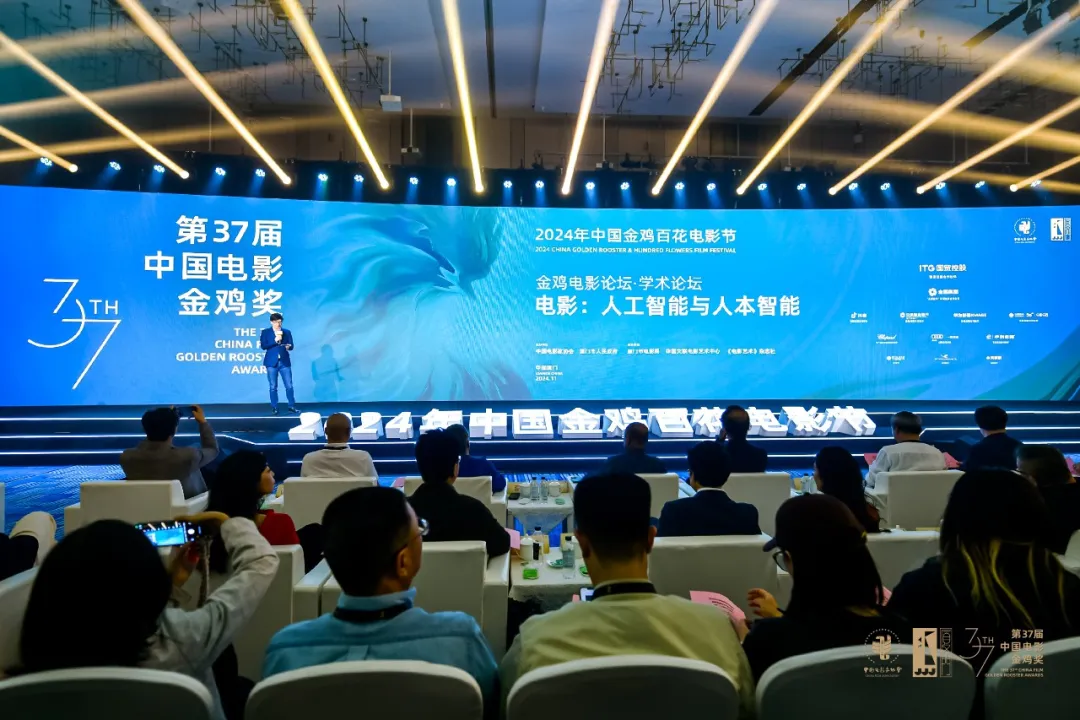
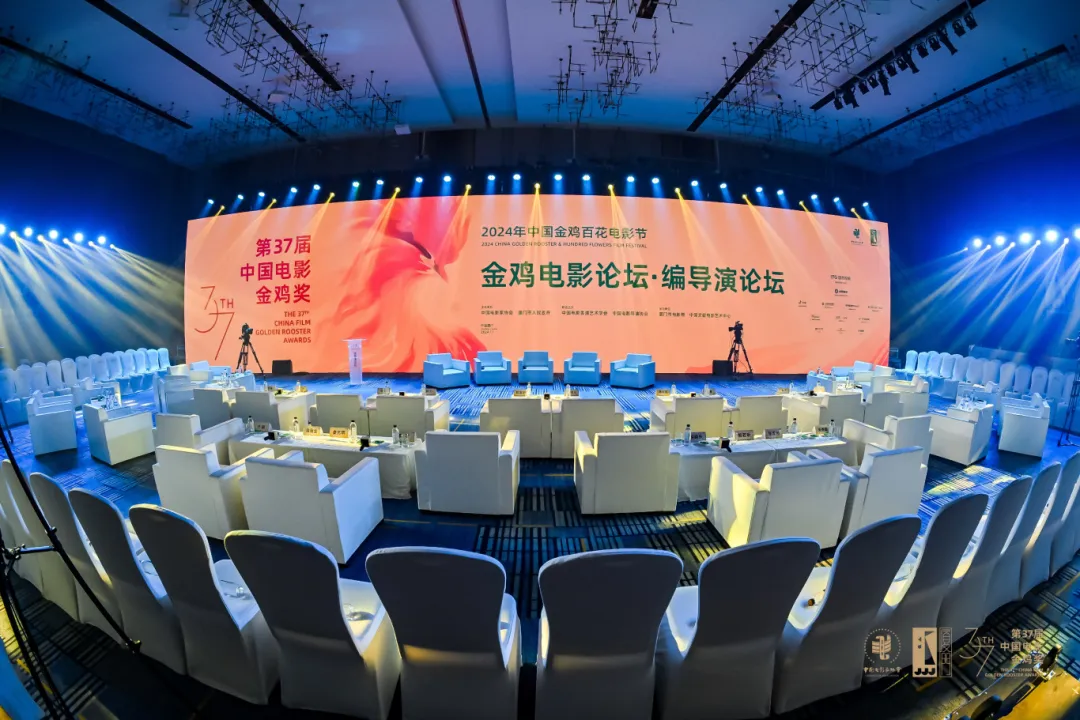
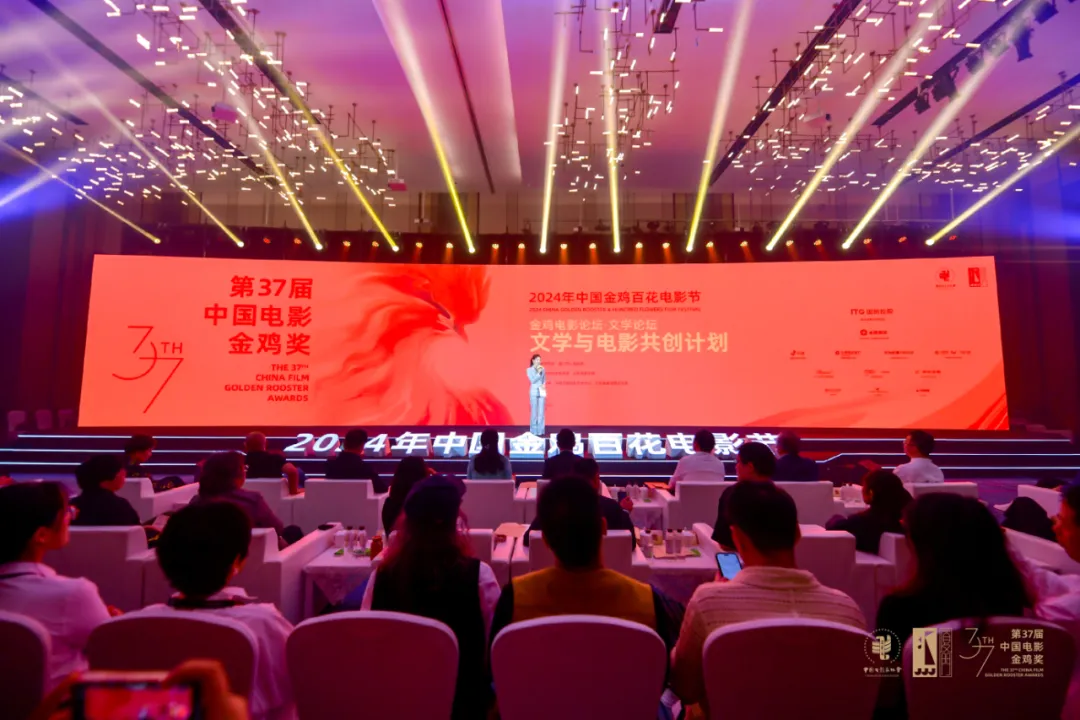
On November 14, the Golden Rooster Film Forum · Academic Forum was held in the Zijin Hall of the Tianyuan Hotel in Xiamen. Under the theme “Film: Artificial Intelligence and Human-Centered Intelligence”, the forum consisted of two parts, the morning “Golden Rooster Annual Lectures” and the afternoon “Golden Rooster Academic Forum”. It aimed to explore the complex relationship between AI and human-centered intelligence and its profound impact on film, and to reflect on and look ahead to an era of AI cinema that keeps a humanist spirit.
– Venue of the Golden Rooster Film Forum · Academic Forum –
Deng Guanghui, secretary of the Leading Party Members’ Group and standing vice chairman of the China Film Association, attended the forum. Fourteen guests gave academic presentations, including scholars Wang Hui, Zhu Jun, Yin Hong, Lu Shaoyang, Wang Zhimin, Wu Guanjun, Sun Chengjian and Shao Yilei; filmmakers Yin Li, Liu Xiaoshi and Song Ning; and industry experts Yang Xianghua, Zhou Xiaohan and Xu Xin. Festival guests including Wang Xingdong, president of the China Film Literature Society, Bai Yimin, chairman of Huaxia Film Distribution, and Huang Zhi, head of the Technology Division of the Film Bureau of the Publicity Department of the CPC Central Committee, attended the forum. The two sessions were moderated respectively by Li Yang, vice dean and professor of the School of Arts of Peking University, and Tan Zheng, research fellow at the Film Art Center of the China Federation of Literary and Art Circles and editor-in-chief of Film Art.
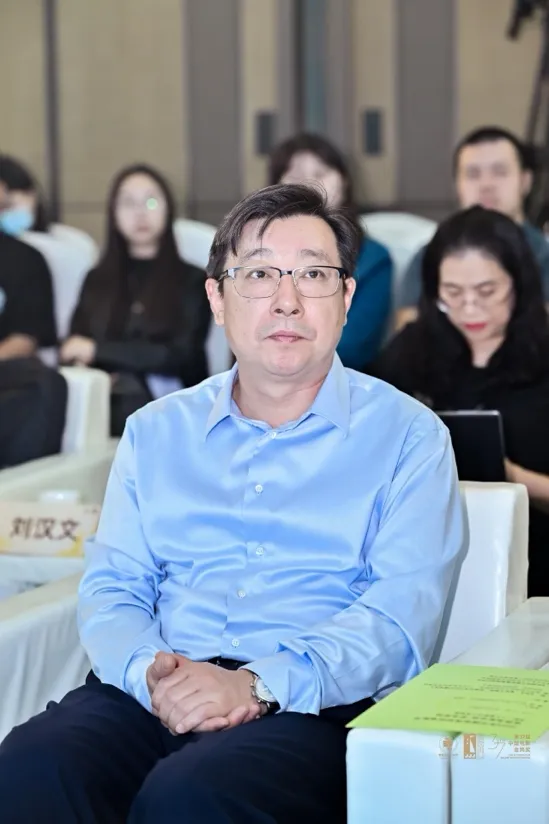
– Deng Guanghui, Secretary of the Leading Party Members’ Group and Standing Vice Chairman of the China Film Association –
The “Golden Rooster Annual Lectures” is a new session of the academic forum this year. It invites prominent figures from outside film studies and the film industry to reflect on the forum’s theme across disciplines, deepening thinking about film in a new format and broadening its intellectual boundaries. This year’s speakers were Wang Hui, one of the first Senior Professors of Humanities and Social Sciences at Tsinghua University, director of the Institute for Advanced Study in Humanities and Social Sciences and member of the Academia Europaea; and Zhu Jun, deputy dean of the Institute for Artificial Intelligence at Tsinghua University, Bosch AI Professor in the Department of Computer Science, IEEE/AAAI Fellow, associate editor of IEEE TPAMI, and founder and chief scientist of ShengShu Technology.
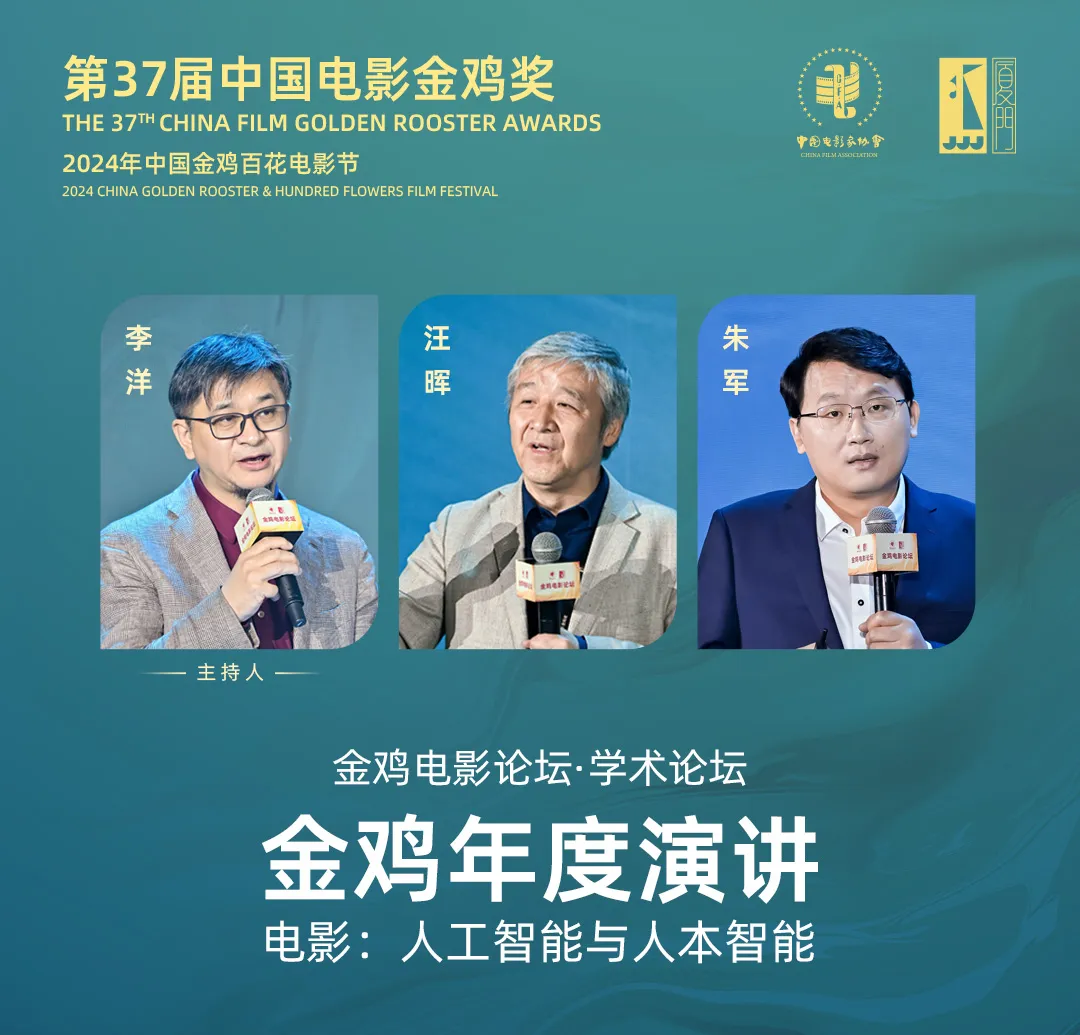 Professor Wang Hui gave a speech titled “Disappearance, Repetition and Displacement: Chinese Cinema in an Accelerating Society”. He discussed the theoretical proposition of the “accelerating society” and its impact on Chinese cinema, noting that the accelerating society developed alongside modern society and is closely tied in particular to capitalism and the information revolution. Professor Wang Hui highlighted the changes in temporal mechanisms brought about by technological change and the shifts in social relations, and discussed three aspects of the accelerating society: acceleration driven by technology, acceleration of social change, and changes in the patterns of daily life. He also explored the synchronicity of time and the phenomenon of temporal dislocation, and how these are reflected in film. By analyzing films from different periods, he showed how Chinese cinema has responded to the accelerating changes of society at different historical stages, and offered insights into the future development of film.
Professor Zhu Jun gave a speech titled “Multimodal Large Models Reshaping Video Creation”. In his speech, Professor Zhu Jun focused on the application of multimodal large models in video creation and how they are reshaping the film industry. He first outlined the development of artificial intelligence, especially large models, and their scaling effects, then explained in detail how multimodal large model technology increases the density and efficiency of interactive information and how these technologies are driving change in the industry. He traced the development of multimodal technology in text, images, video and robotics, and used case studies to show the potential of AI technology to make film and television production more efficient, reduce costs and enhance creative expression, and looked ahead to future applications of AI in the film and television industry. His speech emphasized the efficiency gains AI brings to video creation and offered predictions on how future technological developments will affect the film industry.
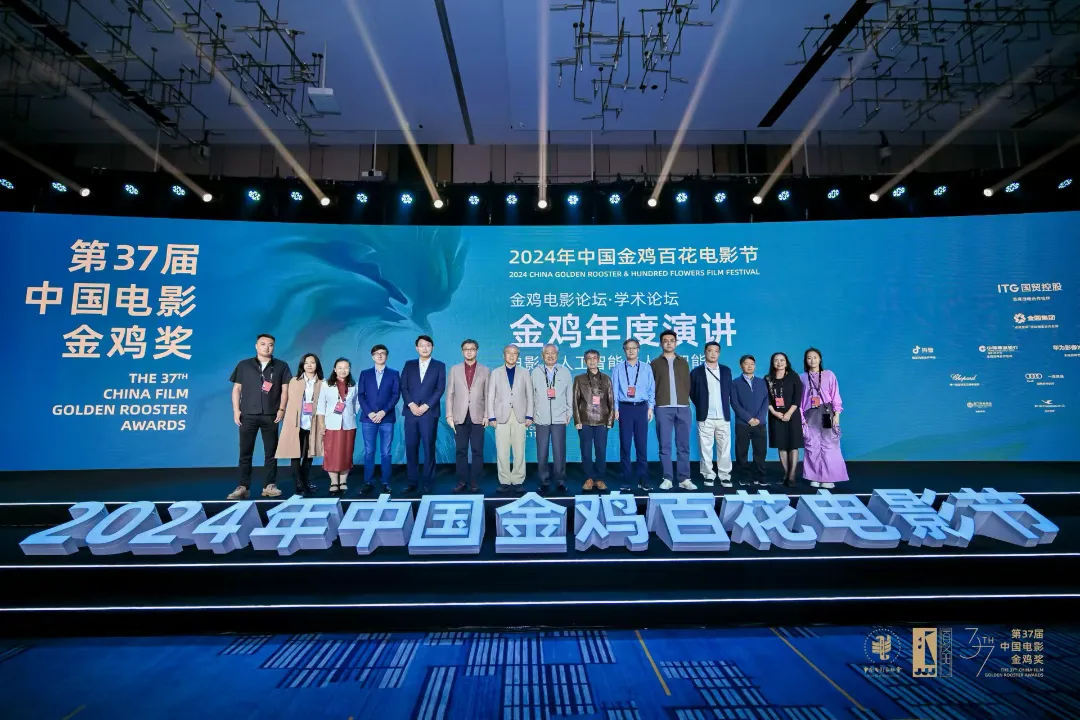
– Group photo of the Golden Rooster Annual Lectures speakers –
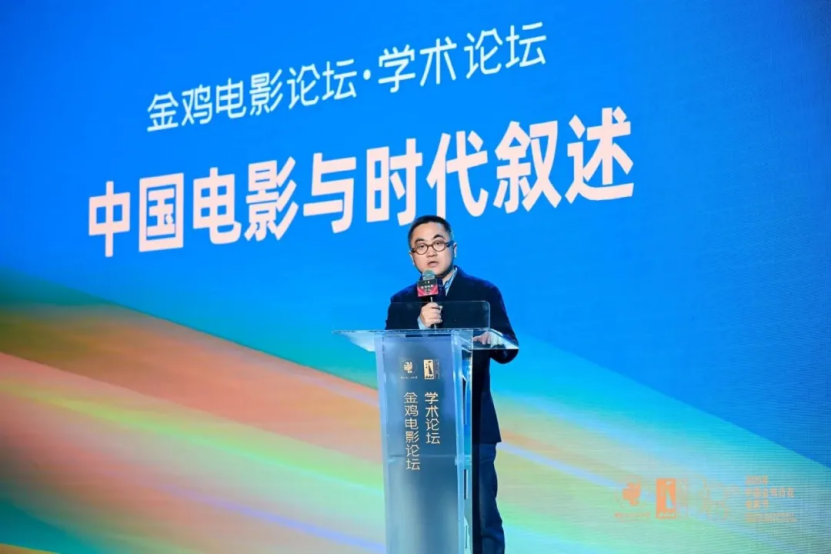
– Golden Rooster Film Forum · Academic Forum Afternoon Session –
At the afternoon Golden Rooster Academic Forum, 12 experts from academia and industry held in-depth discussions on the application of AI technology in the film industry, the relationship between AI and human-centered intelligence, and the impact of AI on artistic creation in film. They were Yin Hong, professor at Tsinghua University, vice chairman of the China Film Association and vice chairman of the China Literature and Art Critics Association; director Yin Li; Yang Xianghua, president of the Film and Overseas Business Group at iQIYI; Lu Shaoyang, professor at the School of Journalism and Communication of Peking University and president of the Theory and Criticism Committee of the China Film Association; Wang Zhimin, professor at the Beijing Film Academy; Zhou Xiaohan, vice president of film, television and entertainment at Kuaishou; Wu Guanjun, dean of the School of Politics and International Relations at East China Normal University and director of the Singularity Research Institute; Xu Xin, head of product for Alibaba’s Tongyi Wanxiang; Sun Chengjian, director and research fellow of the Institute of Film and Television at the Chinese National Academy of Arts; Liu Xiaoshi, director of the film Born to Fly; Shao Yilei, dean and professor of the Shanghai Institute of AI for Finance at East China Normal University; and Song Ning, post-production director and AI director of the film Under the Strangers.
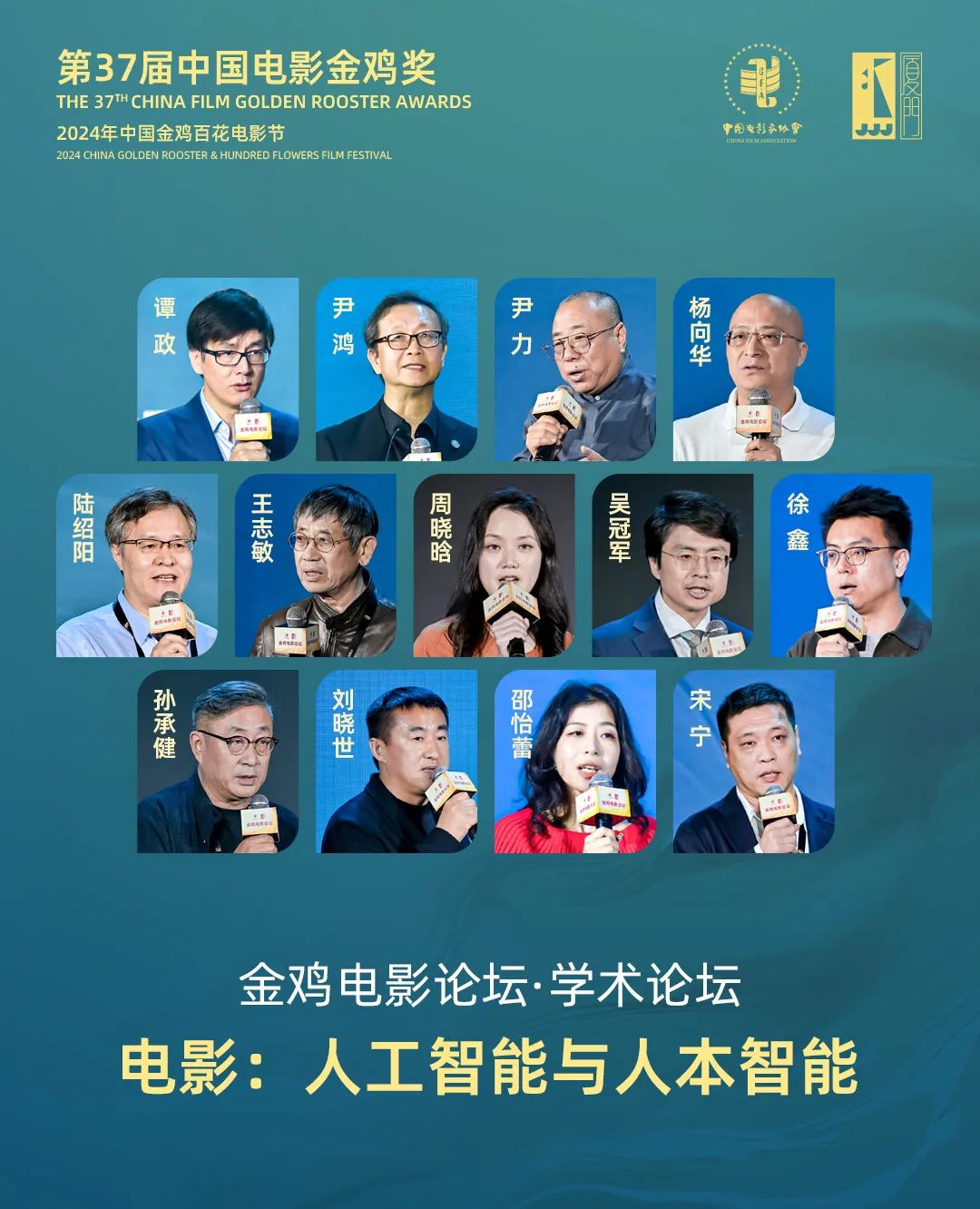
Professor Yin Hong gave a speech titled “Artistic Innovation as the Foundation, Artificial Intelligence as the Enabler”. He said the development of artificial intelligence will raise the rates of reproduction, expression, presentation and participation in film and television imagery, pointing to film and television creation open to everyone, a simpler ecosystem, more diverse products and scenario-based applications. Director Yin Li, speaking on “How AIGC Upgrades and Reshapes the Film and Television Industry”, drew on practical experience to discuss the application of AIGC technology in film and television production, stressing the importance of good stories and artistic expression. In his keynote speech “A New Future for Film Art Assisted by AI Technology”, Mr. Yang Xianghua shared how iQIYI uses AI technology to improve the efficiency and quality of content production, and showed applications of AIGC technology in script evaluation, character design, video retrieval and other areas. Professor Lu Shaoyang gave a speech titled “Reshaping Film’s Imagination in the Age of AI”. He discussed the history of film facing technological challenges and the possible impact of AI technology, and spoke of the arrival of a post-cinematic visual era and the recovery of historical memory. In his keynote speech “Reflections and Hopes on Film Aesthetics and Socio-Culture Prompted by AI: Holistic Thinking and Digital Asset Mining”, Professor Wang Zhimin discussed, from aesthetic and socio-cultural perspectives, the reflections and hopes for film prompted by AI, and stressed the importance of mining digital assets.
Ms. Zhou Xiaohan gave a keynote speech titled “AI-Driven: Short Video Platforms’ Experiments and Results in the Film and Television Industry”, in which she introduced Kuaishou’s experiments and results in short video, especially the application of AI technology in creating short dramas. In his keynote speech “From Sora to the Metaverse: Rethinking the Ontology of the Image Through Generative AI”, Professor Wu Guanjun reflected from a philosophical standpoint on the impact of generative AI on the ontology of the image, and described a shift from Sora to the metaverse. Mr. Xu Xin gave a keynote speech titled “New Technology, New Filmmakers, New Scenarios: Technological Innovation and Applications in Film and Television Creation in the Era of Large AI Models”, in which he showed applications of Alibaba’s Tongyi large AI models in film and television creation, including developments in visual generation and video generation technology. In his keynote speech “The Identity Crisis and Future Development of Film in the Age of Artificial Intelligence”, research fellow Sun Chengjian discussed the identity crisis and future development of film in the age of artificial intelligence, stressing its dual nature as technology and art, with particular attention to the ontological questions of artistic creation in a future society of hybrid intelligent machines. Director Liu Xiaoshi gave a keynote speech titled “Humanism in the Process of Making Film Intelligent”. From a humanist perspective, he discussed the opportunities and challenges in the process of making film intelligent, and voiced concern about artificial intelligence encroaching on artistic creation and human subjectivity. In her keynote speech “Rationally Out of Control: The Interweaving of Human Subjectivity and Machine Creation”, Professor Shao Yilei discussed the interweaving of human subjectivity and machine creation, proposed a new ontology of human-machine creation, and argued that we have now entered the shared-brain era of Human 3.0. Mr. Song Ning gave a speech titled “The Application of AI in the Industrialized Film Production Process”, in which he shared the specific uses of AI in the film Under the Strangers and stressed the positive role of AI in the industrialized film production process.
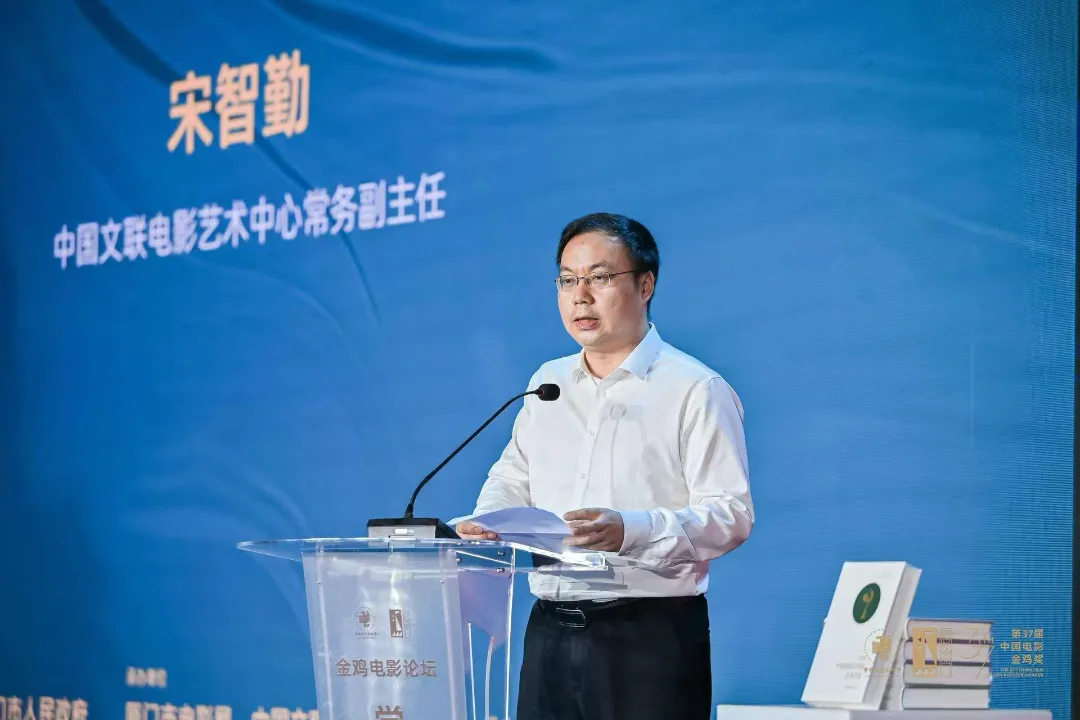
At the close of the forum, the new book Art Reviews of the 2023 China Golden Rooster Awards was launched, introduced by Song Zhiqin, executive deputy director of the Film Art Center of the China Federation of Literary and Art Circles. Compiled by the China Film Association and the Film Art Center of the China Federation of Literary and Art Circles, the book invites Golden Rooster Awards jurors and experts to provide professional analysis of the winning and nominated works, and invites winners to share their creative experience, bringing together and recording the ideas and insights of Chinese film creation in recent years.
– Song Zhiqin, Executive Deputy Director of the Film Art Center of the China Federation of Literary and Art Circles –
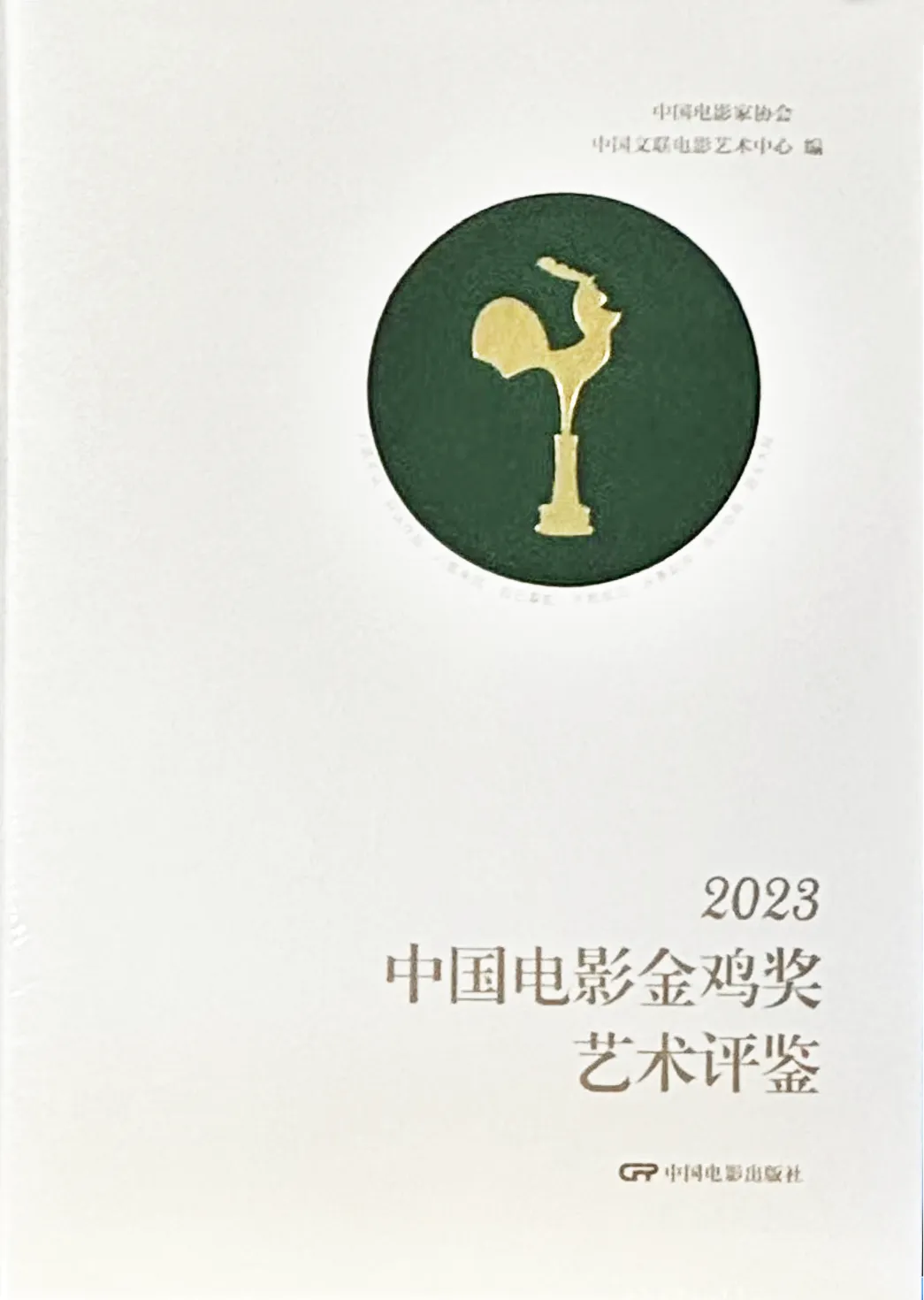
– Launch of the new book Art Reviews of the 2023 China Golden Rooster Awards –
The Golden Rooster Film Forum · Academic Forum was hosted by the China Film Association and the Xiamen Municipal People’s Government, and organized by the Publicity Department of the CPC Xiamen Municipal Committee, the Film Art Center of the China Federation of Literary and Art Circles and Film Art magazine. The forum provided a platform for the exchange of ideas between the film industry and academia, and a source of inspiration for advancing the art and industry of Chinese cinema.