









On November 12, GRIFF Industry held several events from different angles: the first Golden Rooster International Roundtable, focusing on international cooperation and exchange; Genki Kawamura’s Journey in IP Storytelling, an in-depth look at the core of filmmaking; and, on the same day, the Science Fiction IP Promotion Session and the Strait Cinema Night, which brought together filmmakers from China and abroad to discuss new approaches to international cooperation, current topics and new opportunities in the integration of science and film.
This year, GRIFF Industry launched the Golden Rooster International Roundtable. Directors of international film festivals, programmers and representatives of international foundations took part in two in-depth conversations that looked for better approaches to global cooperation for Chinese cinema, and explained the selection criteria and processes of leading international festivals to the young filmmakers present, giving them a clear and workable path.


>Swipe left or right to view more photos<
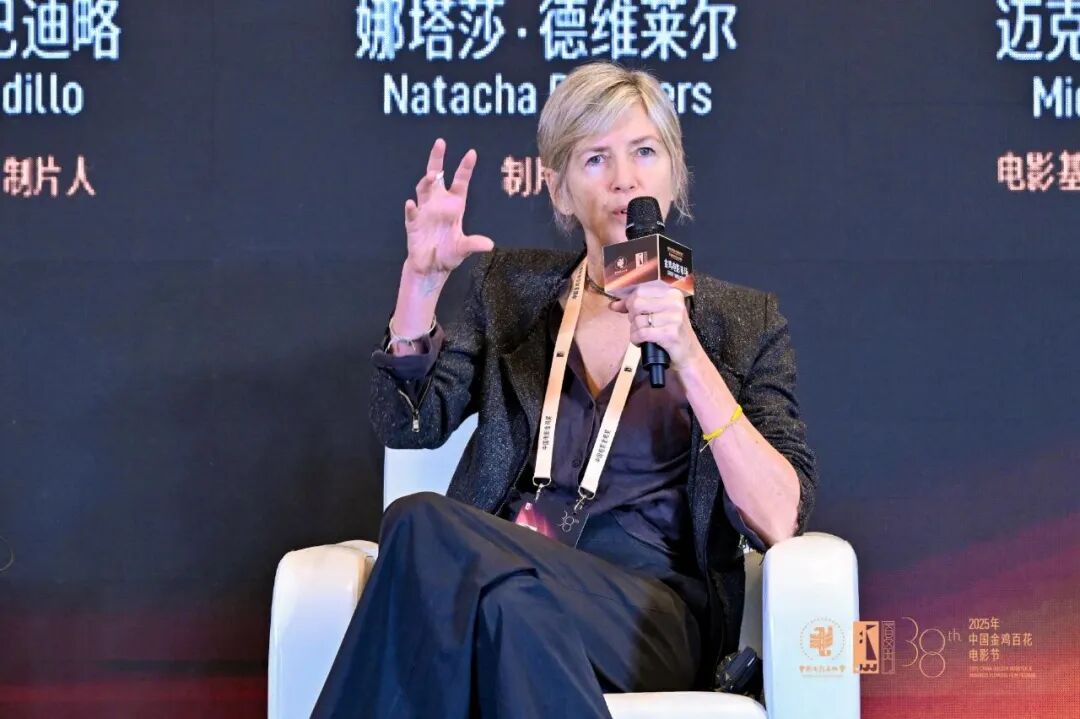
For a film or TV project, securing financing is an essential first step, and many countries now use tax incentives to attract international co-productions. Natacha Devillers, a producer who has worked in the Chinese market for nearly 20 years, explained how France’s National Centre for Cinema and the Moving Image (CNC) operates. Its Global Cinema Centre supports international co-productions in several ways and serves as the main hub and service centre for co-productions between France and other countries.
Pedro Barbadillo, head of the Spanish film fund The Slate, presented Spain’s incentive policies and said he hoped to work more with Chinese filmmakers in animation and other fields. Michael Auret, a film fund manager and producer, shared his experience of diversified financing. Citing several successful projects, he stressed the need to combine global funding with tax incentive resources to build a diversified financing structure.
The three guests went on to discuss the challenges and opportunities of co-productions. Devillers noted that a director’s cultural background often determines a film’s market positioning, which in turn shapes its financing structure and distribution strategy; she considered documentaries and animation easier to co-produce across borders because they travel more readily between cultures. On recouping investment, Auret said producers should not rely too heavily on the box office and should develop other channels such as streaming and rights pre-sales.
On the prospects for cooperation with China, the three guests spoke from the perspectives of the market, culture and project practice. Barbadillo pointed to China’s large audience and its leading capacity for technological innovation; Devillers said she was drawn to China’s long history and culture; and Auret listed several co-productions in development, pointing to further possibilities for co-produced films.

>Swipe left or right to view more photos<
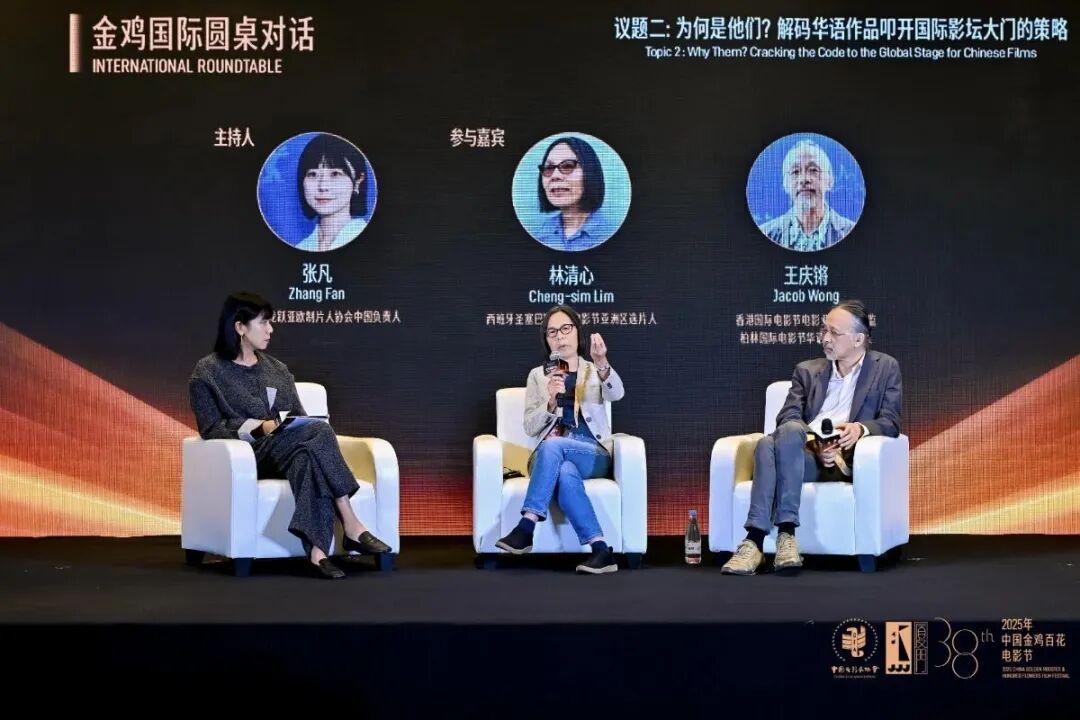
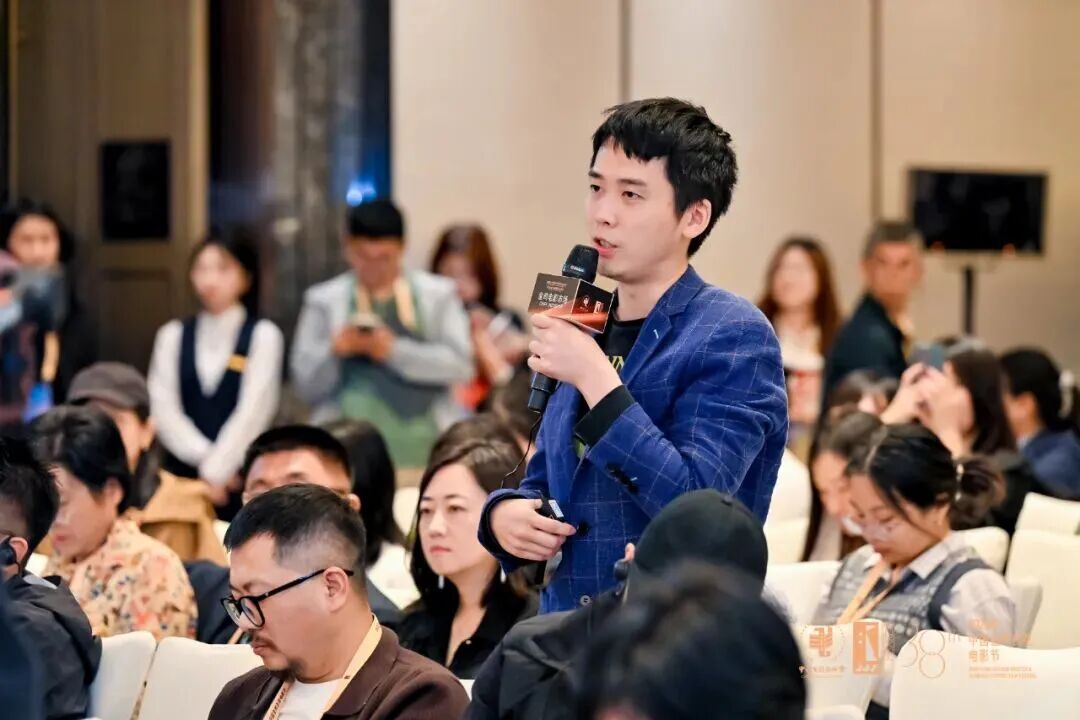
The second conversation, themed “Why Them? Strategies for Chinese-Language Films to Enter the International Film Scene”, featured Wang Ching-chiang, Chinese-language programmer for the Berlin International Film Festival, and Lin Qingxin, Asia programmer for the San Sebastián International Film Festival. They explained how international festivals select films and discussed current international opportunities for Chinese-language cinema.
Wang and Lin agreed that filmmakers applying to international festivals should pay attention to submission deadlines. Lin stressed that submitting early and with a more finished cut is the key to improving the chances of selection. On what makes a “good film” and how festivals select films, the two programmers said that there is no fixed formula for a good film, but it needs a strong authorial voice, a distinctive film language and emotional truth. Lin added that a good film can change the way audiences see the world.
On a question many young filmmakers care about, how to deal with rejection by a festival, Wang quoted the Chinese proverb “a loss may turn out to be a blessing” to encourage them. He said that rejection does not mean a film has failed, and that filmmakers should stay confident, widen the range of festivals they submit to and try multiple platforms. On subject matter, Lin and Wang agreed that international festivals care more about authorship and artistic quality than about the subject itself, and encouraged filmmakers to return to sincere expression. Their frank, professional answers gave the young filmmakers present clear direction.
After the two conversations, discussion among those present continued. The Golden Rooster International Roundtable gave Chinese and international filmmakers a platform for in-depth exchange and laid groundwork for young filmmakers to develop projects globally.
>Swipe left or right to view more photos<
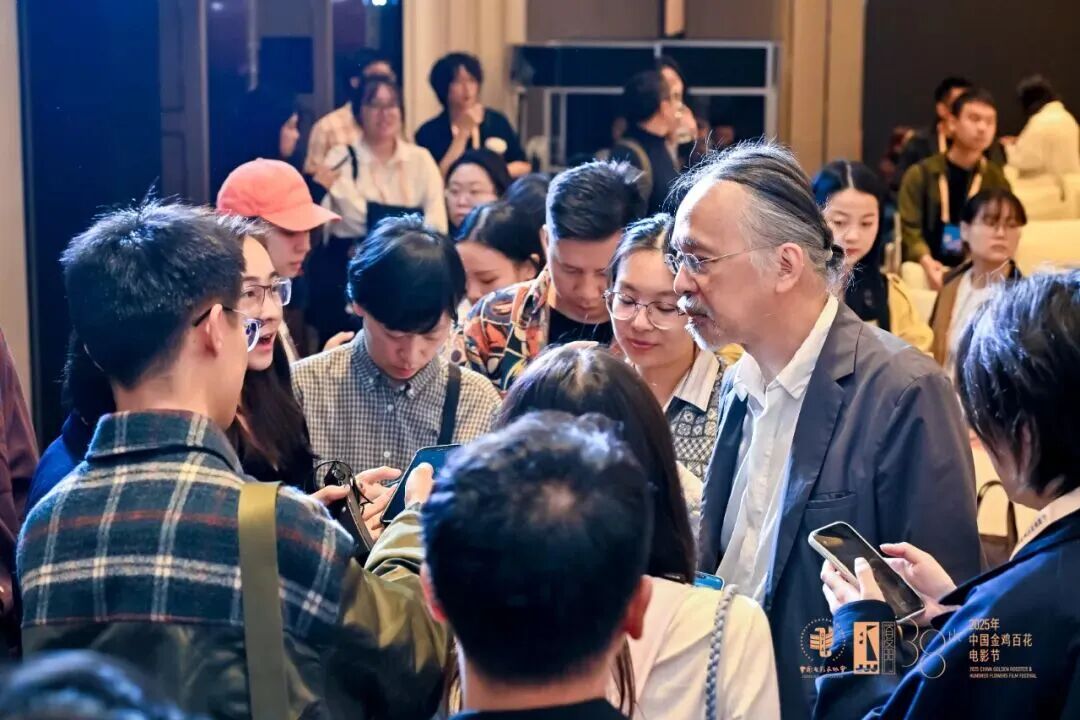
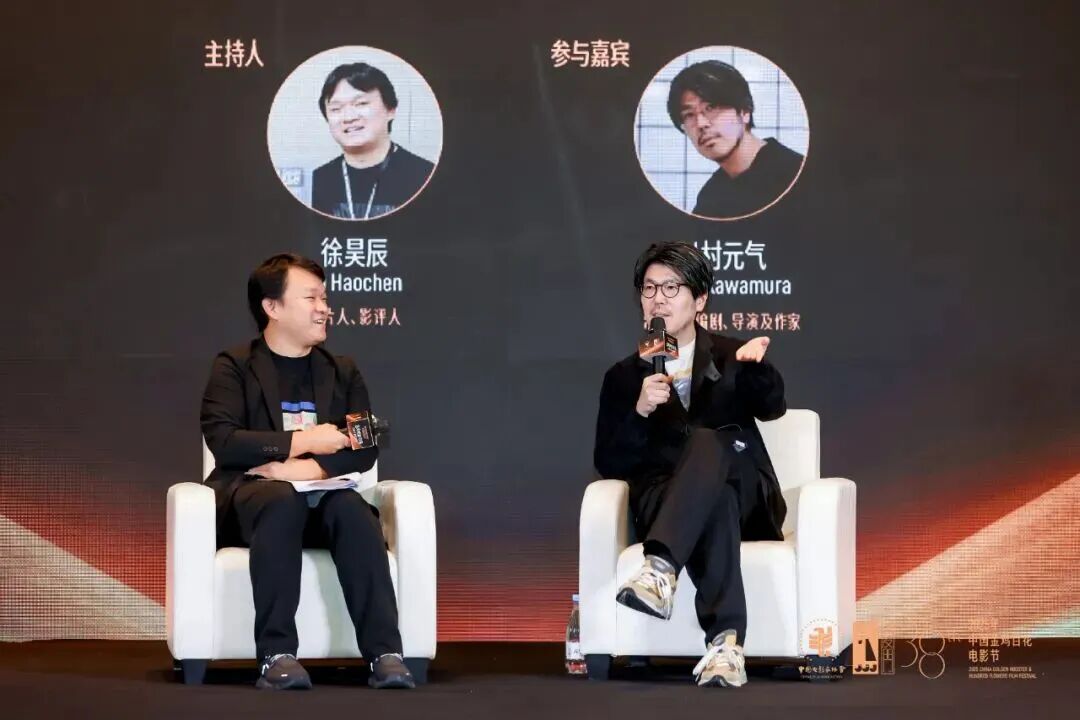
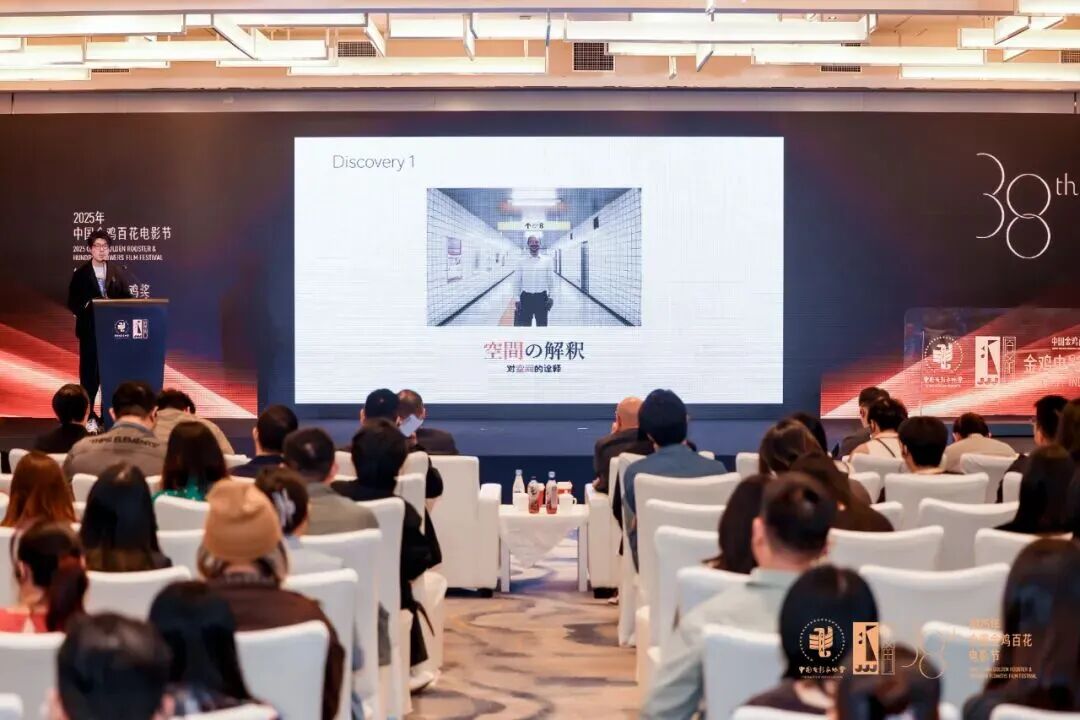
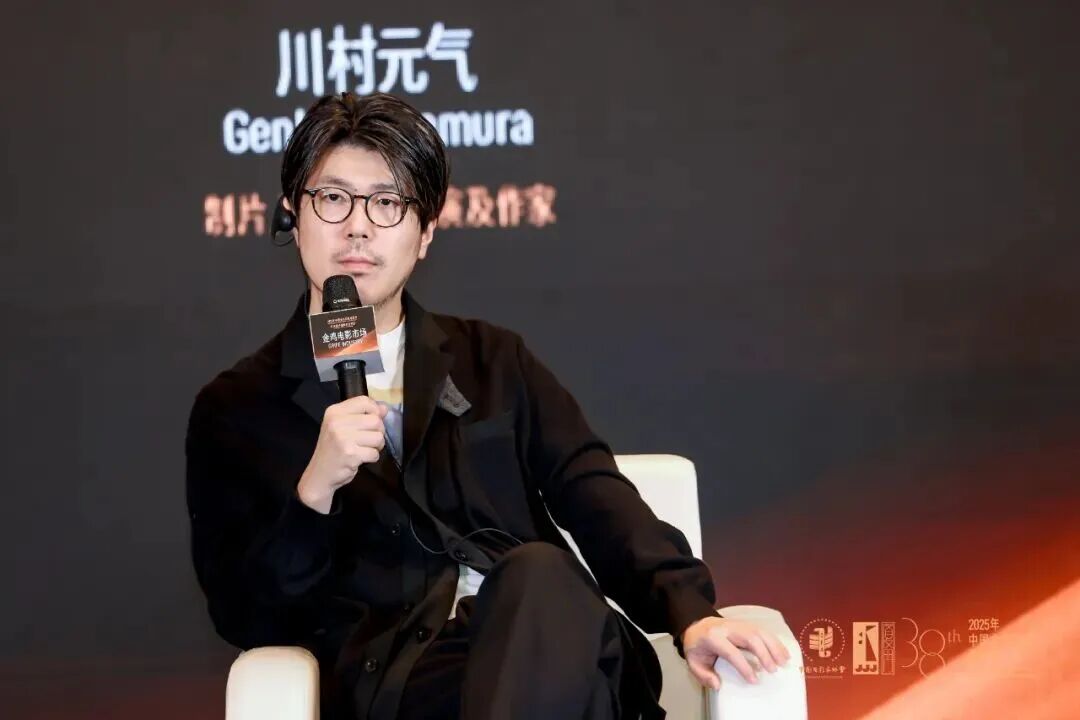
The first Golden Rooster Film Academy event this year featured Genki Kawamura, the Japanese producer, screenwriter, director and novelist. Under the title “Exit and Entrance: Genki Kawamura’s Journey in IP Storytelling”, he gave an in-depth talk on filmmaking, using his films such as Your Name. and Exit 8 to explain his creative method in accessible terms.
He described the creative process as a combination of “discovery” and “invention”. He stressed the importance of universality and modernity. “Discovery” means finding universal human emotions and contemporary feelings that fit the times, like picking a fresh mushroom in a forest. “Invention” means turning that mushroom into a unique dish through new approaches to storytelling, music and visuals.
During his talk, Kawamura described the particular experience of watching his new film Exit 8 in a cinema. In the film, for 15 seconds the audience is immersed together in a completely still image. For filmmakers, this example shows that watching a film in a cinema has an appeal that phones cannot replace.
In the exchange session, Kawamura discussed current topics such as the use of AI with Chinese filmmakers, teachers and students. He said that although he uses AI tools, his aim is to “find what AI cannot do.” He stressed that the core of creative work always lies in human insight and emotional resonance, and that technology is only a tool that supports “discovery” and “invention.”
Finally, he expressed his appreciation for China’s young filmmaking community and said he hoped for more cooperation in the future. The session offered both an account of creative experience and ideas on how stories grow.
>Swipe left or right to view more photos<
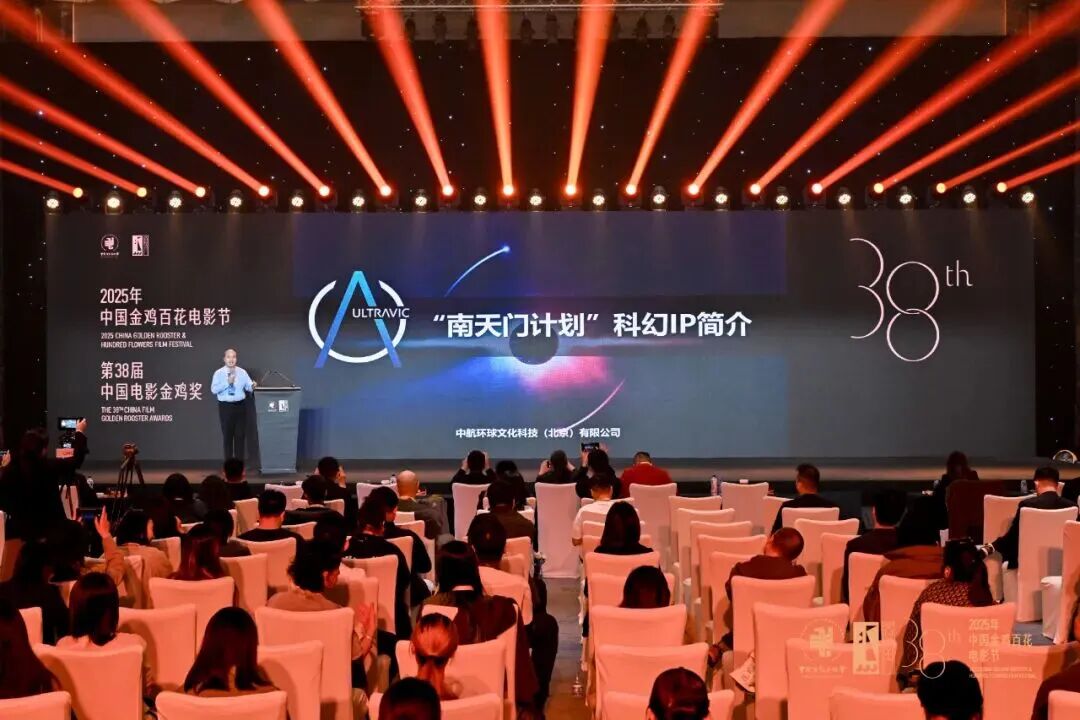
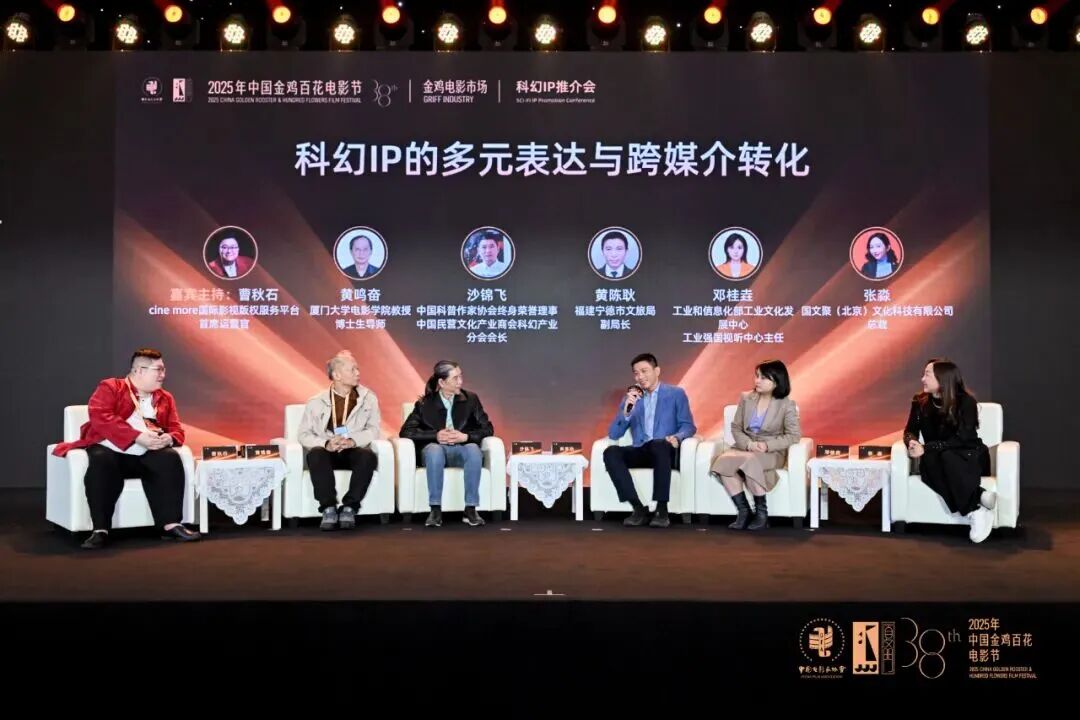
The Science Fiction IP Promotion Session in the afternoon presented six science fiction IPs and included a roundtable. The projects covered a wide range of subjects and genres, reflecting the diversity of Chinese science fiction. They included original IP rooted in China’s aerospace technology and culture, such as Project Nantianmen, as well as major works such as Infiltrating Guiyang and The Martian Festival Exam, which have won the Galaxy Award and the Hundred Flowers Award for Science Fiction Literature.
At the roundtable, industry experts discussed the adaptation of science fiction IP across formats and media. Chinese science fiction IP is moving from single texts toward an ecosystem spanning the whole industry chain, but it still needs to overcome bottlenecks in coordination between creators and the industry. Through technological innovation and cross-sector cooperation, it may produce a portfolio of global IP with both cultural depth and market value.
In the coming days, GRIFF Industry will hold further film promotion sessions, Golden Rooster Film Academy events and other activities, providing a platform for filmmakers to cooperate and exchange ideas. Registration remains open, and industry guests are welcome to register and book GRIFF Industry events.