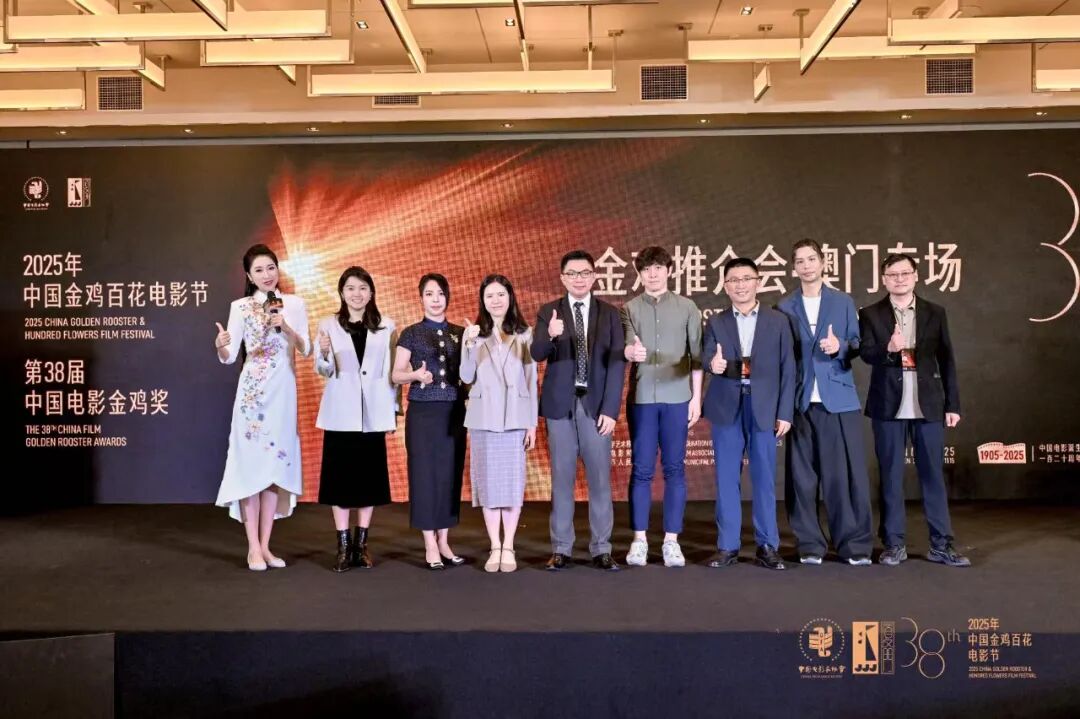
In the morning, at the Golden Rooster Promotion Conference · Macao Session, Li Jiaying, representing the Cultural Development Fund of the Macao SAR Government, presented the latest on two funding programs, “Filming in Macao” and “Macao Elements.” The Filming in Macao production funding program is open to film and TV projects not yet shot; the Macao Elements promotion and distribution funding program supports completed works that contain Macao elements. Macao’s film and TV funding programs aim to attract production teams from outside Macao to explore new opportunities in the global industry.
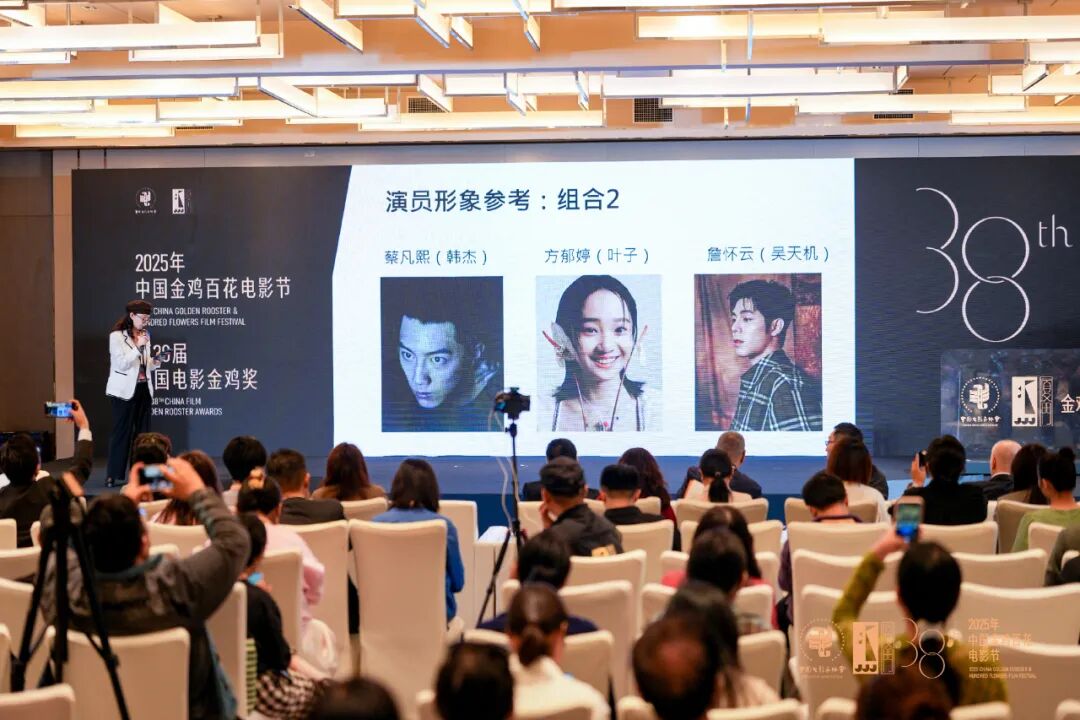
Five film and TV companies presented projects at the session, including the documentary Home in Macao, a portrait of Macao society, and the music-themed drama The Girl Who Chases White Clouds, reflecting the range of Macao’s film and TV industry. Huang Tingting, nominated for Best Directorial Debut at the 38th China Golden Rooster Awards for Lucky House, spoke about her development as a filmmaker. The first student from Macao admitted to the Directing Department of the Beijing Film Academy, she said she looks forward to further collaboration with mainland filmmakers.
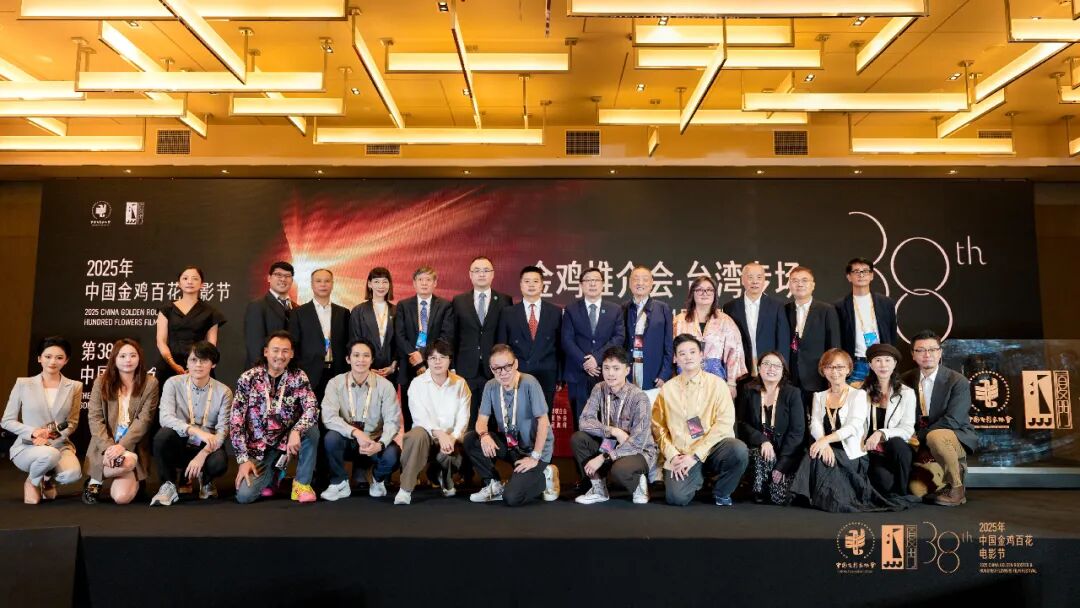
In the afternoon, the Taiwan Session was the third held at GRIFF Industry. This year’s session presented recent work from Taiwan cinema. The projects spanned suspense, comedy, fantasy and other genres, showing the range of subjects and storytelling in Taiwan cinema and the ambitions of Taiwan filmmakers in IP development and commercial expansion. Among them, the large-scale IP project Ji Shen, an action story rooted in local culture, is planned for development into live-action films, series, animation and AAA games, with the aim of building an IP universe.

Literary IP presentations were added to the Taiwan Session for the first time this year. Literature and film benefit each other, and several of the Taiwan literary IPs presented have strong potential for screen adaptation. The works of Chiung Yao are among the most representative literary IPs in the Chinese-speaking world; Biography of Mr. Five Willows is currently the only historical martial arts novel with Tao Yuanming as its protagonist; The Little Lieutenant recovers a child’s innocent view of the world and is a modern fable about having and losing.
Only a Fool Would Love You and Don’t Miss You, both presented at earlier Golden Rooster Promotion Conferences, were released in mainland cinemas this year. The conference gives cross-Strait films an efficient platform for presentation and business matching, while Taiwan films bring new energy to Chinese-language cinema.
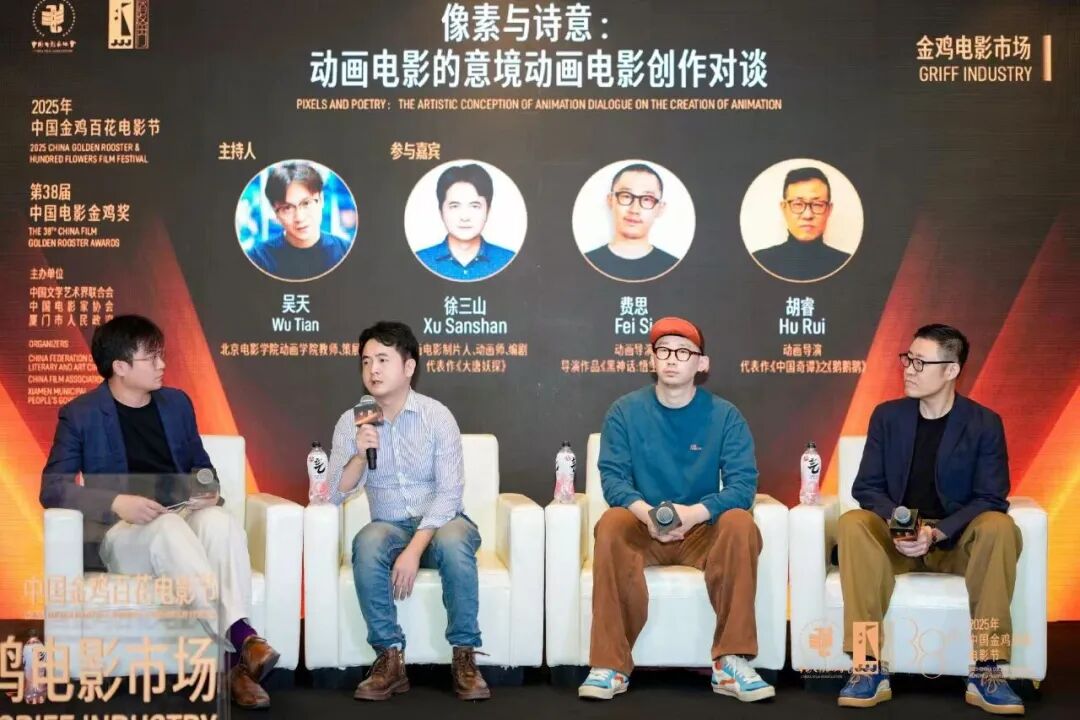
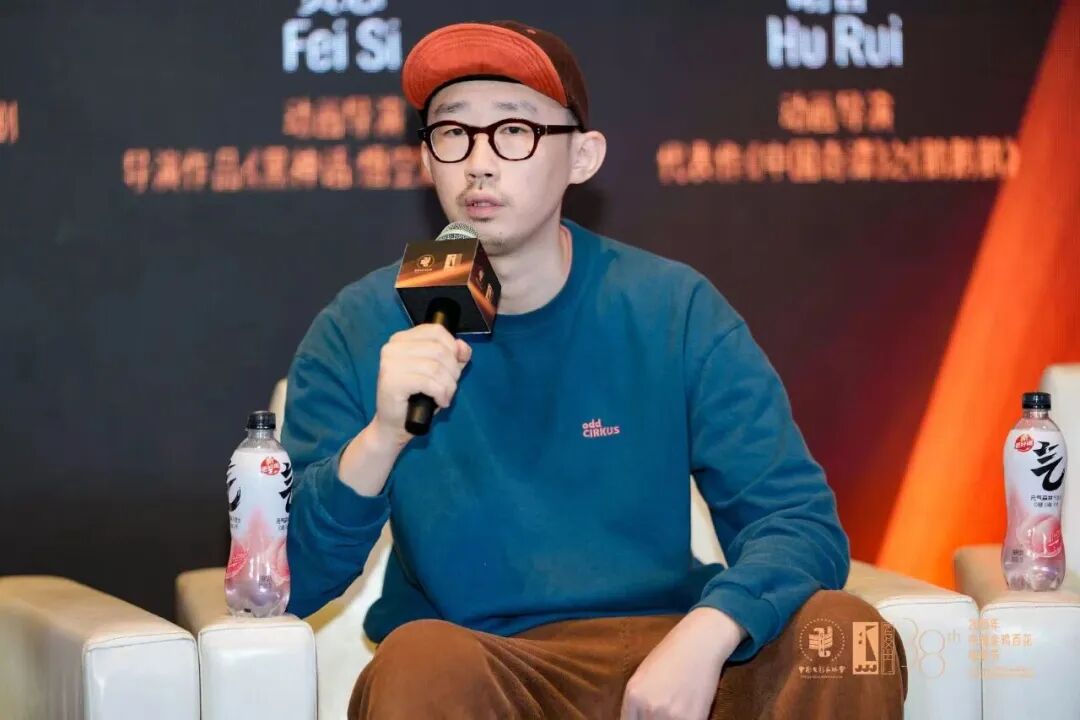
At the Golden Rooster Film Academy that morning, three animation directors, Xu Sanshan, Fei Si and Hu Rui, held a lively conversation on “Pixels and Poetry: Mood in Animated Film.” They talked about their own work and discussed animated shorts, current trends in animation and AIGC (AI-generated content). In the Q&A, the three directors took questions from the audience.
← Swipe left or right for more →
For animation directors, the short film is the first step into animation. Xu Sanshan started as an animator and learned character performance and production workflow by working on 3D animated shorts. Fei Si had the chance to work on the animated sequences of the film version of My Own Swordsman, gaining experience combining live action with animation.
On recent changes in the animated short film landscape, Fei Si said self-media is the biggest driving force: in the new media era, animated shorts no longer depend on traditional distribution, and creators can reach audiences directly, incubate and monetize IP, and even gain chances to make features. Hu Rui said audience viewing habits have changed sharply with media convergence, and he tries to balance academic filmmaking with the tastes of a new generation.
Facing a fast-changing environment, Fei Si proposed “deep genre-making“: since audiences already know the conventions of traditional genres, filmmakers should dig deeper and break established patterns, creating freshness through density of information and depth of emotion. Hu Rui said that individuality is what keeps a work alive.
On the arrival of AI, Xu Sanshan said frankly that last year he had been dismissive of AIGC in animation, but last month, after using AI to turn a classic 2D animated sequence into 3D, he was surprised by the test results. He now believes AI, as a tool, can raise creative efficiency considerably and help directors realize ideas faster and at lower cost, especially for new media. Fei Si’s position was firmer: high expectations and a full embrace; he predicted that AI may next replace animators. Hu Rui said he hopes AI evolves quickly and takes over preparatory work so that directors can express their individuality more fully.
“Whatever happens, story is always king” was the consensus of all three directors. Combining reason and feeling, the conversation gave young animators practical and thought-provoking guidance.
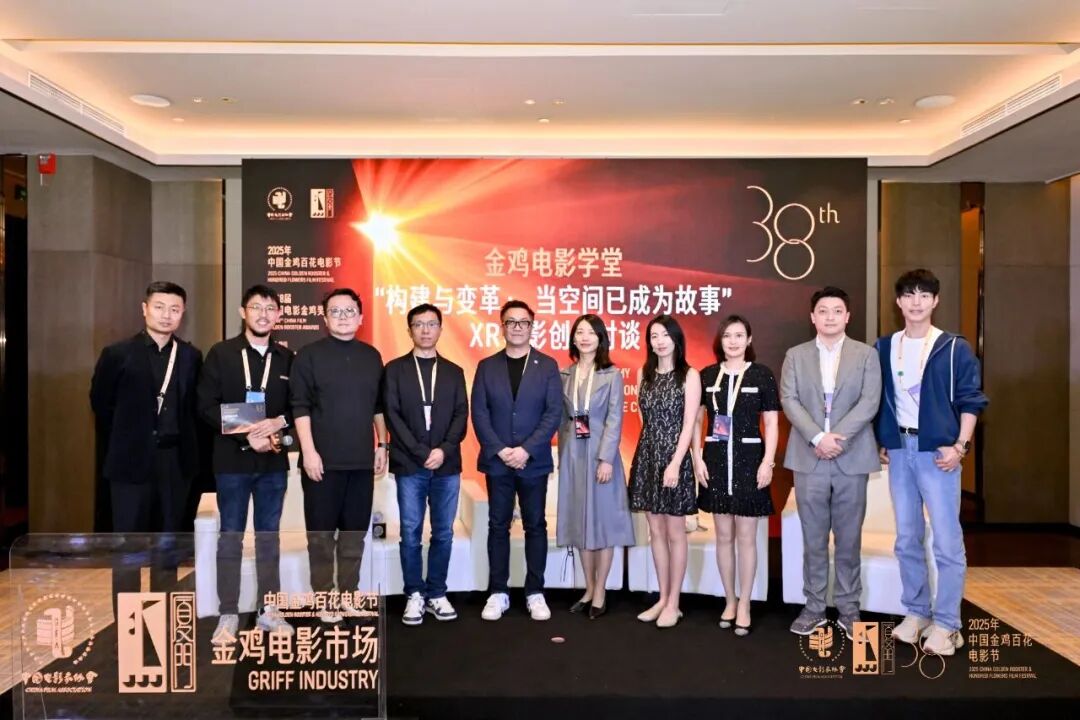
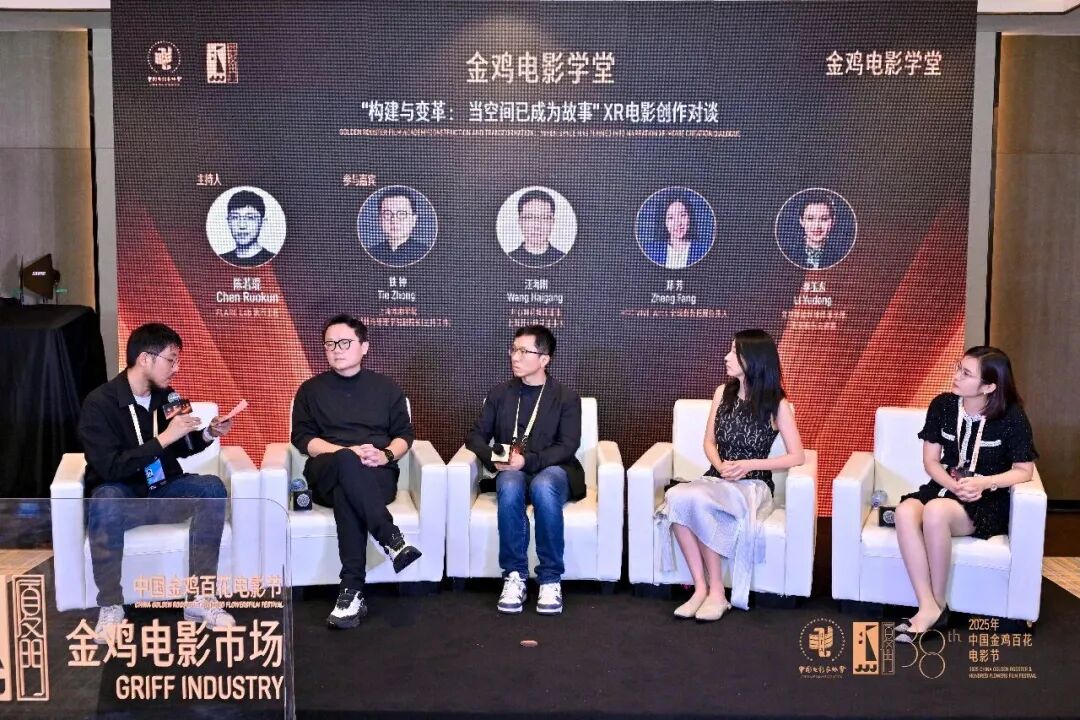
In the afternoon, the Golden Rooster Film Academy focused on XR filmmaking under the theme “Construction and Transformation: When Space Becomes Story.” Four experts in XR creation, academia and industry first gave keynote speeches.
The keynotes were followed by a roundtable on how XR technology opens new possibilities for cross-media storytelling and how spatial logic is changing filmmaking.
This Golden Rooster Film Academy session covered many aspects of XR filmmaking, which together sent one signal: XR is not only a technological upgrade but may also reshape creative logic and the industry ecosystem.