Creative Statement
My mother is a fisherman's daughter. Because my grandfather favored sons over daughters, she had to leave school early. Although she was hardworking, driven and smart, she suffered a great deal. I often think that if she had been able to continue her studies like my uncle, she might have become someone remarkable, but fate never gave her the chance.
Forty years later, even today, countless girls are judged "not good enough" by those around them simply because of their sex and are deprived of the right to choose their own fate. This pains me. Many adult women also face injustice in society.
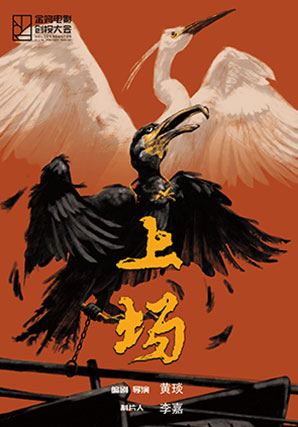
West Dongting Lake, where my mother was born, is a habitat for egrets. While the egrets fly, beautiful and free, the fishermen fish below with their cormorants. Many people do not know that cormorants can fly too; long domestication has simply trained the habit out of them, and when one or two awaken and try to escape, they are knocked back into the water with a pole. The fishermen tie the cormorants' necks with straw rope so that they catch fish but cannot swallow them, and then squeeze the fish out of their throats. The cormorants can only watch the egrets fly and live out their lives with their throats held tight. They are like countless trapped women who could fly but cannot rise into the open sky.
I based my heroine, the little girl Xizhou, on my mother. All the women in the film mirror one another. The story of Wang Chao and Xizhou is the story of a man coming to understand women, and even more the story of countless women fighting against the traps of fate.
I have also hidden a small personal wish in the film: my mother fought with everything she had against life so that I could have the chance to pursue my dreams. If I could meet my mother as a young girl now, I would hope to protect her dream too.
Synopsis
Wang Chao grew up in the city never wanting for anything, but his family was not a happy one. His mother left to make her way elsewhere, and he never understood why. Influenced by his basketball-loving father, he set his heart on becoming a professional basketball player. After his father's death, the rift with his mother deepened, and basketball became his only emotional anchor, as well as his way of defying her. He chased his dream with everything he had, but an injury shattered it. Dejected and unsure what to do with his life, he goes to teach at the primary school in the fishing village where his father once taught, to clear his head. He is there to coach the boys' basketball team, but meets a little girl, Zhao Xizhou, who pesters him to let her play. Fierce and wild, with none of the shyness expected of little girls, Xizhou loves basketball but has never had the chance to play. Moved by her tenacity, Wang Chao makes her a substitute, never expecting that she has an extraordinary gift; she stuns everyone in game after game. Wang Chao sees his former self in her and longs to help her realize her basketball dream and go on to a wider world. But the road is not so simple. The fishing village's preference for sons and Xizhou's family problems make him realize that even a girl as outstanding as Xizhou has no chance of breaking away from this place. In protecting Xizhou, Wang Chao gradually grows up. His conviction that "Xizhou must break out" also helps him understand why his mother left all those years ago. In the end, Wang Chao helps Xizhou realize her basketball dream and leave the fishing village, and he himself emerges from the shadows and faces life again with a positive outlook.